Clone Your Best Customers (FULL COURSE)
 Adam Abdur RahmanFounder, Revgrowth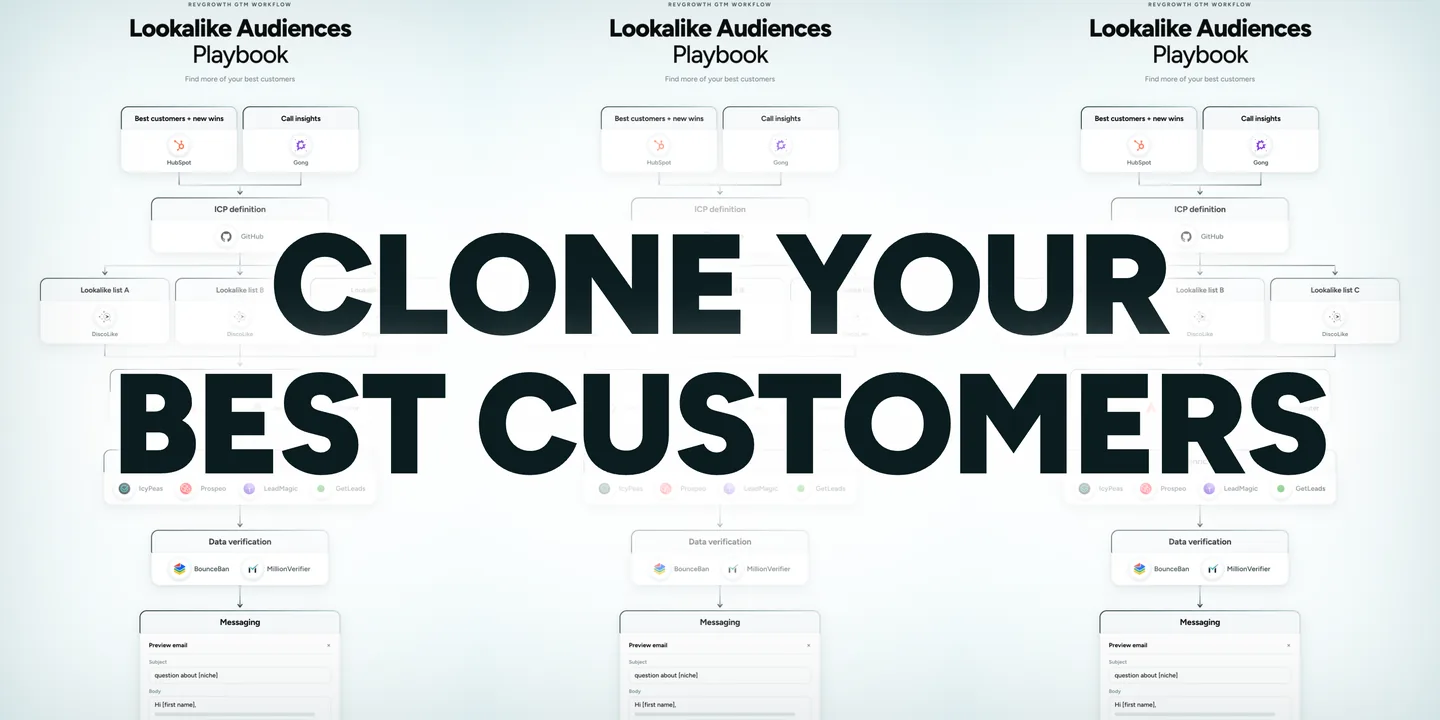
We've generated $30M+ in pipeline across 10M+ cold emails.
The first net-new list we'd build for any B2B company is a list of companies that look like its best customers.
Your best customer has these patterns.
- They generate strong margins
- They buy consistently over time
- They have a high customer lifetime value
Finding more companies like them is a no-brainer.
Below is the full build in eight steps, with the exact tools for each one.
If you sell B2B and have a few customers you'd clone tomorrow, this is for you.
The Full Build
Step 1: Start From Your Best Customers
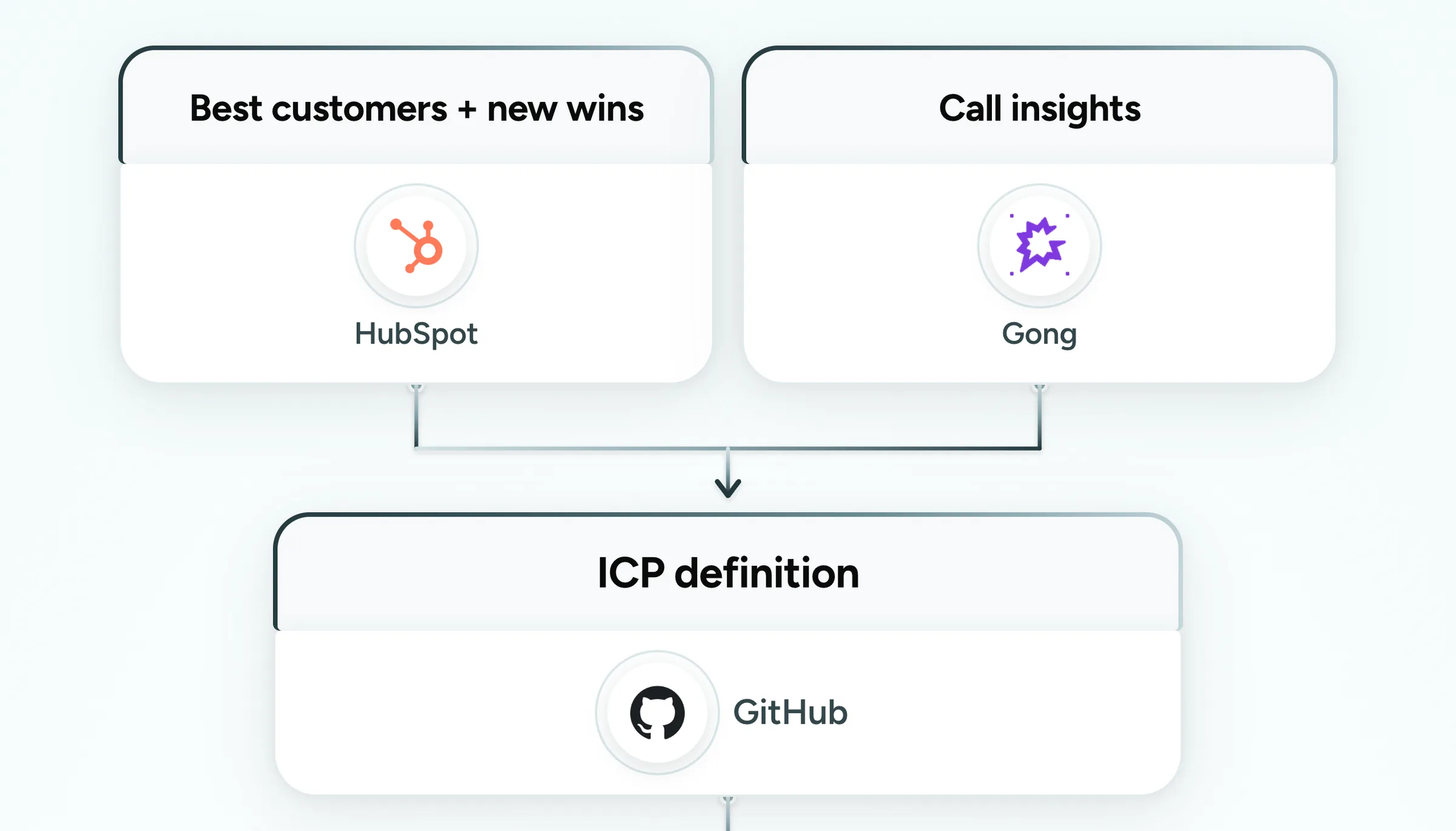
Pull your best accounts from your CRM (HubSpot). Pick the ones you'd sign again tomorrow.
Then pull the calls with their buyers (your call transcription tool of choice), and note the problem they had and the exact words they used.
You'll use those words twice, once to define who to look for and once to write the emails.
No call history yet? Start from the logos and case studies on your own website.
Real, named customers make the best seeds.
Step 2: Write Down What They Share
Size, industry, location, and the titles of the people who bought.
Write it precisely enough to search with, and keep it in one file (GitHub) so every list gets judged against the same definition.
Then test it on your own customers.
If your best customers fail your own definition, rewrite it before you search for anyone.
Step 3: Build Three Lookalike Lists
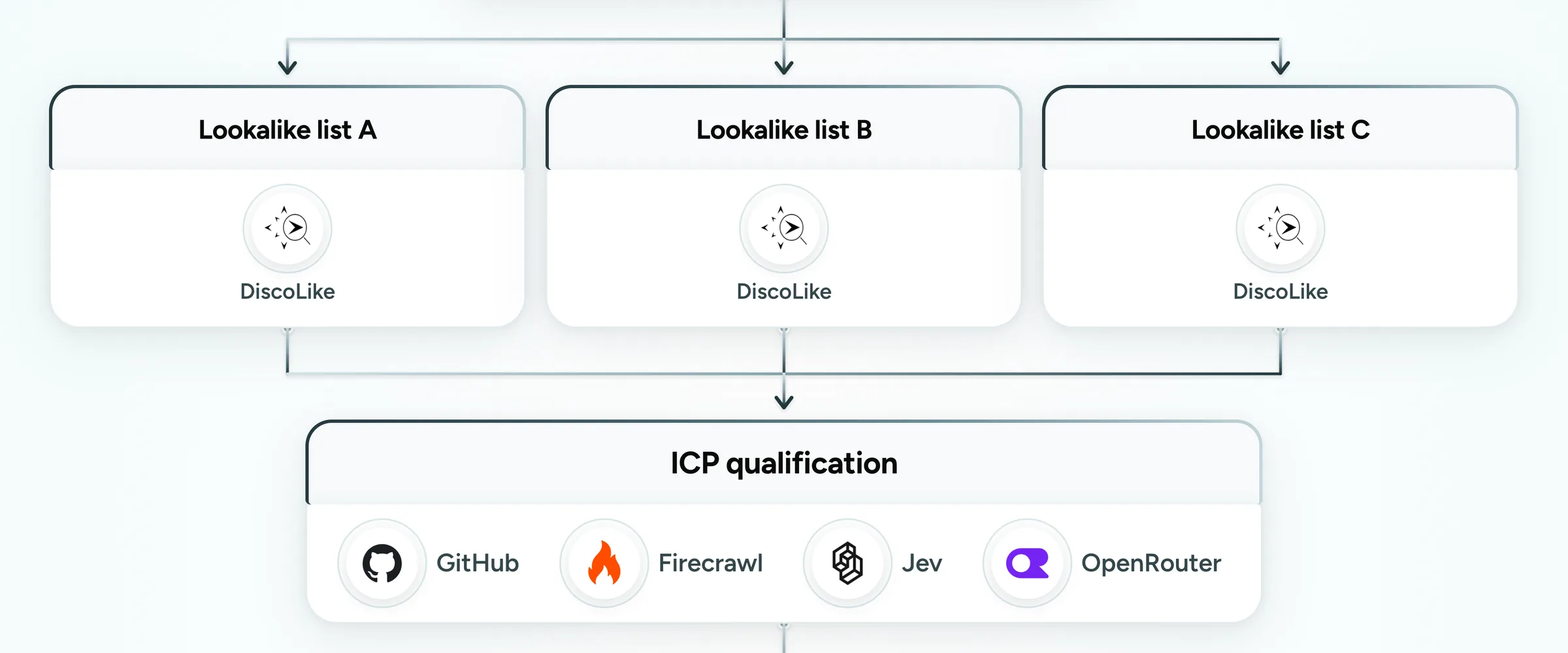
A lookalike tool (DiscoLike) takes your customers' websites and finds companies like them by industry, size, tech stack and location.
- Each search takes up to ten seed websites
- Set a similarity floor. 80 or higher gives you a strict list
- Add a subindustry filter, so the list holds the same kind of business as your customer
- Run a count before every full pull, so you know the size first
The subindustry filter works best when your customers are operators, like roofers, dental practices or dealerships. It's thin for software companies.
Selling by territory? Search around a point with a radius to get the lookalikes near each rep.
It also runs over MCP, so Claude Code can run every search for you.
Split your seeds into three groups and run one search per group.
Keep the three lists separate. Each one becomes its own campaign, so you learn which kind of customer is worth cloning.
Expect the real pool to come in smaller than the first count, once you filter for fit and the right roles.
Step 4: Let the Website Decide
Before you pay for a single contact, read every company's website.
A scraper (Firecrawl) pulls the homepage, the customer pages and the case studies. Dead and parked domains drop out first.
Then an AI model (Jev, OpenRouter) checks each site against your ICP file and sorts it.
- A strong fit goes to tier one
- A partial fit goes to tiers two and three
- No fit gets removed before you spend anything on it
DiscoLike now has its own fit model too (Vibecheck). Use it as a second check on the names you'll call first.
Here's a prompt to start from. Paste in your ICP and the site's text.
You're checking whether a company fits our ideal customer profile.
Here is our ICP.
[paste your ICP file]Here is their website.
[paste the homepage, customer pages and case studies]Reply in four lines. Give the fit (strong, partial or none), what they sell, who they sell to, and the exact line from their site that proves it.
Make it quote the site. If it can't point to a line, the answer doesn't count.
Then check a sample by hand, and run a second, blind pass on the close calls.
A high similarity score never qualifies an account on its own. We've found that scraping the website is a more accurate proxy.
Step 5: Find the Right Person
Only the accounts that passed get enriched, so you only pay for contacts at companies that fit.
Pick the buyer by company size. At small companies that's the owner or CEO, and a VP or director as they grow.
At bigger accounts, find more than one person. The senior title won't always be the one who replies.
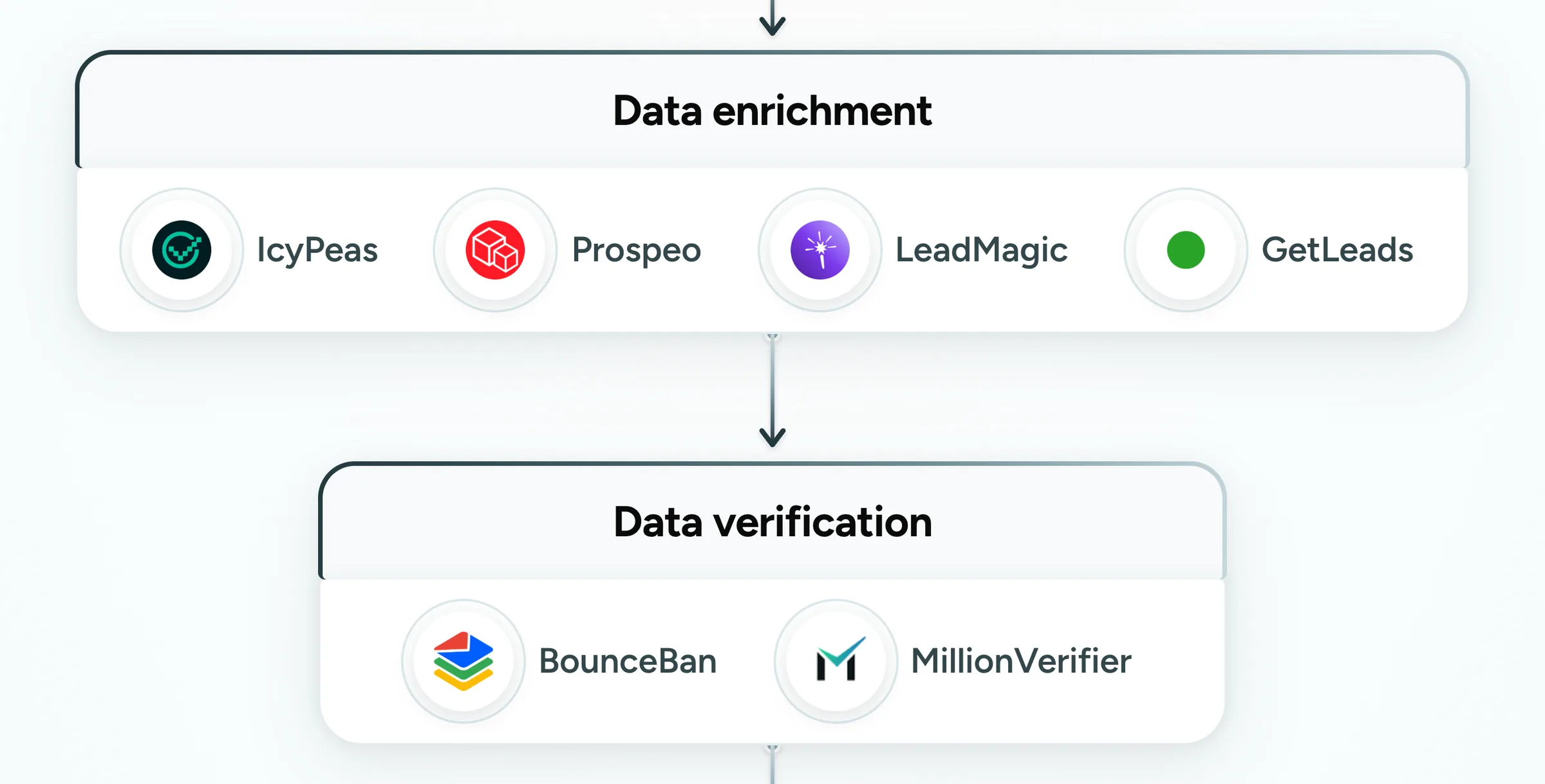
Then run a waterfall through IcyPeas, Prospeo, LeadMagic and GetLeads.
Each one only sees the contacts the ones before it missed, so you never pay twice for the same person.
Step 6: Verify Every Email Twice
Every address gets checked by two tools before anything sends.
MillionVerifier checks every address first. BounceBan checks every one that passes.
- Valid addresses stay
- Catch-alls stay only if BounceBan marks them deliverable, and they send from their own campaign so their results read separately
- Invalid, disposable and unknown addresses are removed
An enrichment vendor's own check never counts as one of the two.
The second check catches what the first one misses, especially on catch-all addresses.
Step 7: Lead With a Case Study and a Gift
A lookalike already looks like a company you've helped.
So show them that result, then hand them something useful before you ask for anything.
Claude Code drafts the emails from your case studies and the calls from Step 1.
- Open with the result you got for a company like theirs, in numbers they care about
- Add a front-end offer, something small you build for them for free, like a sample list, an audit or a mockup
- Say in one line what you do and who you do it for, so they never have to ask
- Describe the problem in your customer's words from the calls, so it sounds like their world
Keep the usual rules.
- Two emails total, and no breakup email
- No link in the first email. Send the gift as a reply once they say yes
- Every claim has to be true for every company on the list
One wrong detail about their market is enough to lose them.
Here's a first email to adapt.
Subject: {the result} for {a company like theirs}
Hi {first name},
We helped {a company like yours} {get the result} in {time}.
{Their company} looks a lot like them, so I put together {the gift} for you. {One line on what's inside.}
We {what you do} for {who you do it for}.
Want me to send it over?
Name the customer in your case study only if they've said yes. Otherwise describe them, like "a roofing company in Texas."
Step 8: Reach Out by Tier
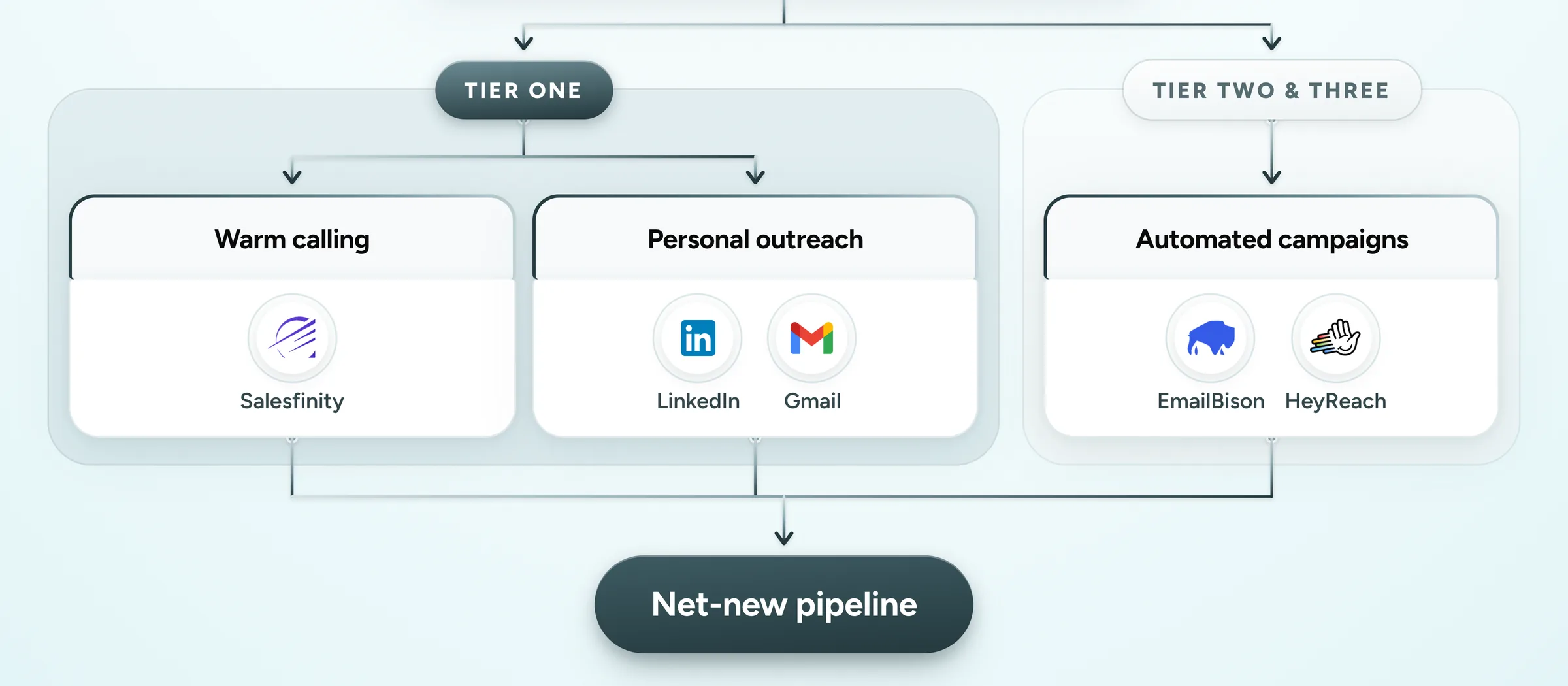
Tier one gets a person. Tiers two and three get a system.
- Tier one gets a warm call (Salesfinity) and a personal message on LinkedIn or by email, one to one
- Tiers two and three get automated email (EmailBison) and LinkedIn (HeyReach)
Every lookalike list runs as its own campaign, so you see which kind of customer is worth cloning again.
Then Test Your New Wins
A new customer still has to earn a spot on your best-customer list. It takes time to see if they stay, pay well and are easy to work with.
So treat each new win as a test. If it already matches the patterns of your best customers, run a small list of 100 to 200 lookalikes while the win is fresh, and keep it apart from your main lists.
There are no results to show from a new win yet, so the email leads with a case study from a customer who has proven out.
Once the new customer proves out too, add them to your seeds.
Your First Week
One step a day.
- Pick ten best customers and pull their calls
- Write the ICP file and test it on those ten
- Run three lookalike searches, and count before you pull
- Read every website and check a sample by hand
- Find and verify the buyers, write two emails around a case study and a gift, and call tier one first
Where to Start
Run the first week above with ten customers before you add more seeds.
Whatever you cut to move faster, keep Step 4.
Read the website before you buy a single contact. It's cheap, and it decides what you spend on everything after it.
The full playbook is mapped step by step, with every tool, at revgrowth.ai/playbooks/lookalike-audiences