When to Follow Up on a Cold Email With No Response
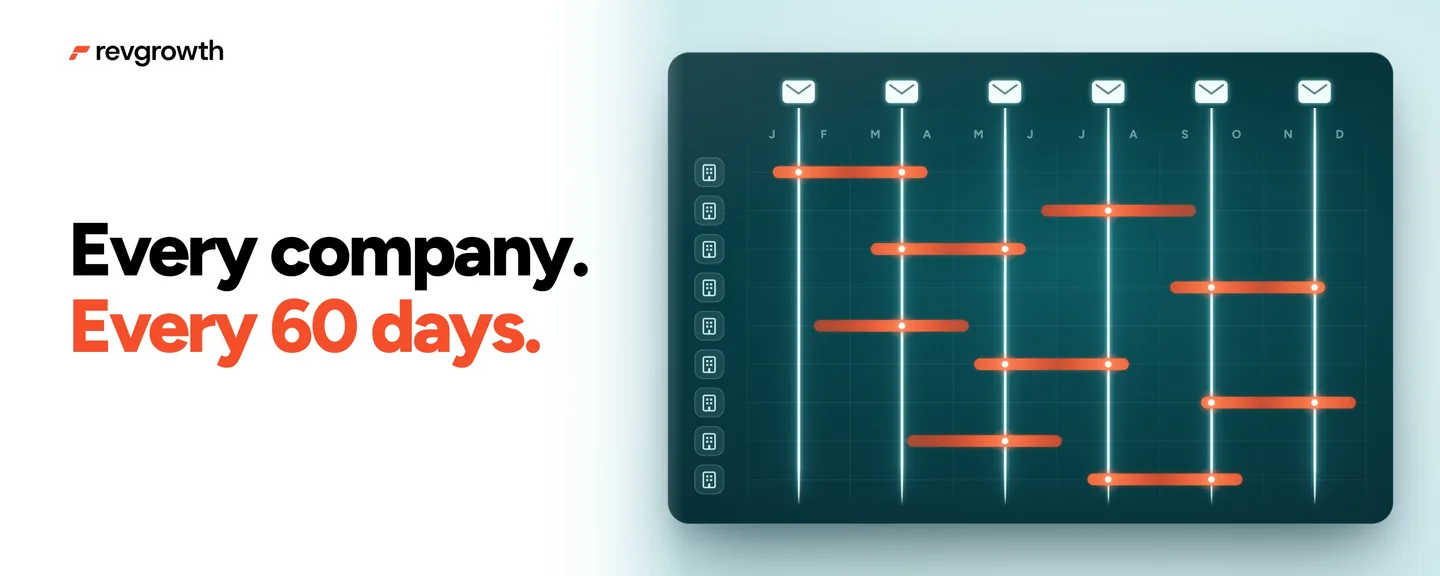
Once a cold email sequence ends with no reply, follow up 60 days later with one or two new emails and a new reason to talk. Buyers spend about three months looking, so a 60-day gap lands inside every buying window without anyone feeling chased. Here's the full loop, with the math on one market.
 Adam Abdur RahmanFounder, Revgrowth
We've generated $30M+ in pipeline across 10M+ cold emails.
Pull up your outbound numbers and you'll see touches. Emails sent, calls made, reply rate by campaign.
How much of your market heard from you in the last 60 days?
That's the number that decides how much pipeline you get.
Reason why is your buyers decide at different times all year. A few are deciding this month, and a different few will be deciding next month. Reach part of your market once and move on, and you miss everyone whose timing changes after you've left.
So this is the full breakdown.
Why one email misses your buyers, why every 60 days, the math on one market, and the loop that keeps your whole market hearing something new from you, without adding a rep.
Why One Email Misses Your Buyers
LinkedIn's B2B Institute found that 95% of your potential buyers aren't ready to buy today.
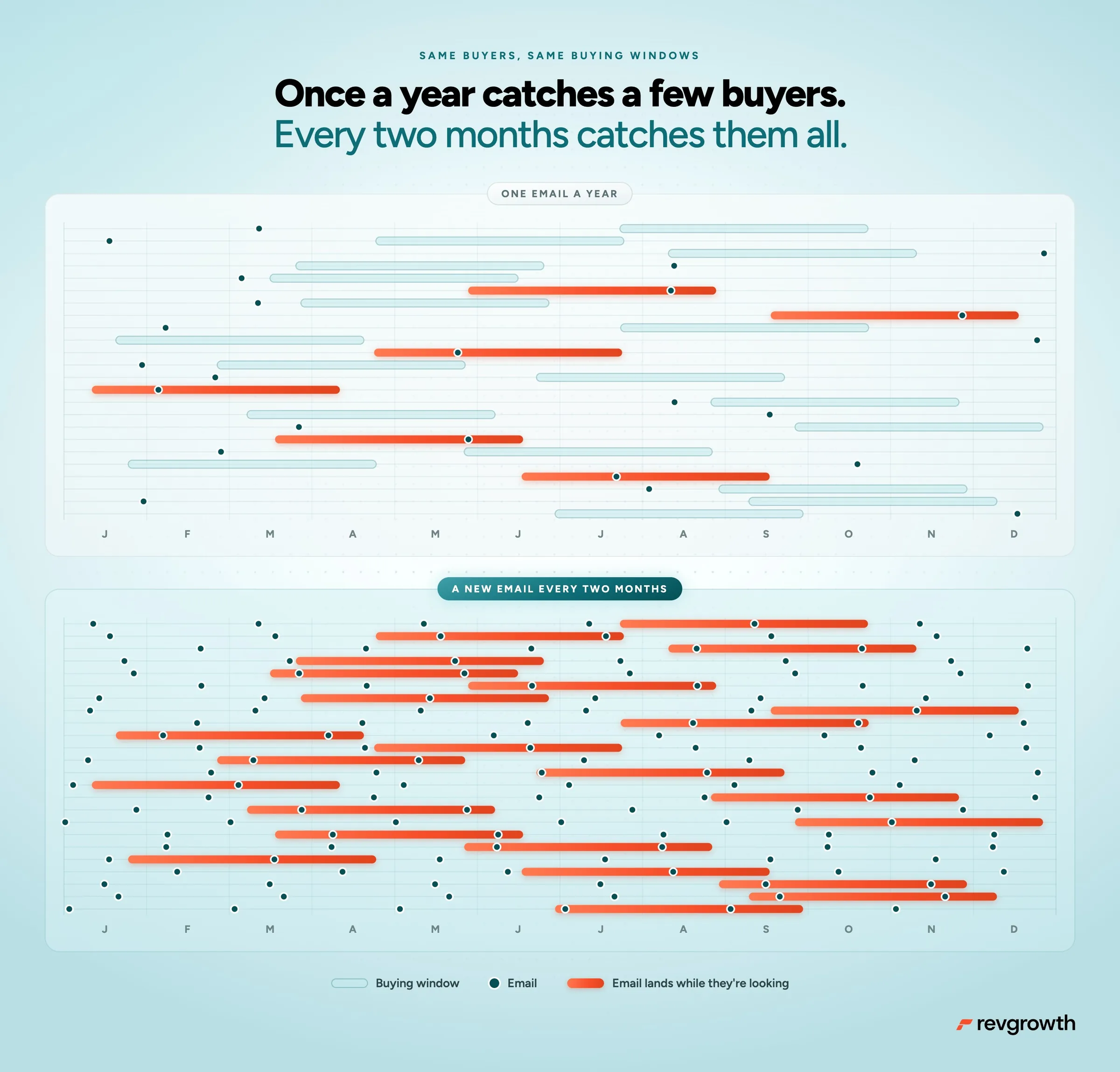
Picture what that does to a list. If a company switches vendors about once every five years, about 1 in 20 of your market is shopping in any given quarter.
And it's a different 1 in 20 every quarter.
Say a buyer spends about three months looking before they pick someone.
Email them once a year, and your email lands inside those three months about 1 time in 4.
Email them every 60 days with something new, and you land inside it every time.
So keep the gap between emails shorter than the time a buyer spends looking. Do that across your whole market, and no buying window opens and closes without an email from you.
Landing in the window only gets you seen, though. The email still has to give them a reason to answer, and that's what the rest of this build is for.
Why Every 60 Days
The gap between emails has two limits.
It has to be shorter than the time a buyer spends looking, or their window opens and closes without you.
And it has to be long enough that nobody feels chased.
Every 60 days clears both.
It's shorter than a three-month search, so every buyer hears from you while they're still looking.
And at six short passes a year, nobody feels chased.
Someone who said "not now" in March can be shopping by May. When they are, the email they get from you is a new one.
Now picture your market getting a better email every 60 days, built from what the last pass learned. That's the loop below.
Count Coverage Instead of Touches
Judge each campaign by its reply rate, and you'll cut the ones that look weak and move on to a new list.
The people who didn't answer get dropped, right before some of their buying windows open.
Track these five numbers every month instead.
- How many companies and buyers are in your market
- How much of it heard from you in the last 60 days
- How many times the average account heard from you this year, and how many different reasons you gave them
- Replies and meetings per cycle, read across the whole market
- How much of your market has never heard from you at all
That last one is where the pipeline you're missing sits.
These numbers also tell you why pipeline moved. When meetings dip, you can see whether you ran out of market, ran out of reasons, or reached fewer people than last month.
The Math on One Market
Say you sell to 7,000 companies, with three people worth emailing at each. That's 21,000 people.
Each one gets up to two emails per pass, and a new pass every 60 days. That's 42,000 emails a cycle.
Sixty days holds about 43 weekdays, so that comes to about 1,000 emails a sending day.
At 20 a day per inbox, that's 50 inboxes. At Google Workspace's listed $7 a user a month, they cost about $350 a month.
Keep a few spares warming in the background too, so a burned domain can be swapped out right away.
Your reach comes from inboxes, and your reps' time goes only to the people who answer.
That's how you cover a whole market without hiring more SDRs.
Keep Every Pass Worth Opening
Cold emailing the same market every 60 days only works if people don't mind hearing from you.
So keep every pass short, one or two emails. Send it only to people who never answered. And give it a reason worth reading, your best offer or something new the last pass taught you.
Get that wrong and replies drop, opt-outs climb, and your domains pay for it.
That's the loop. Here's how to build it.
The Full Build
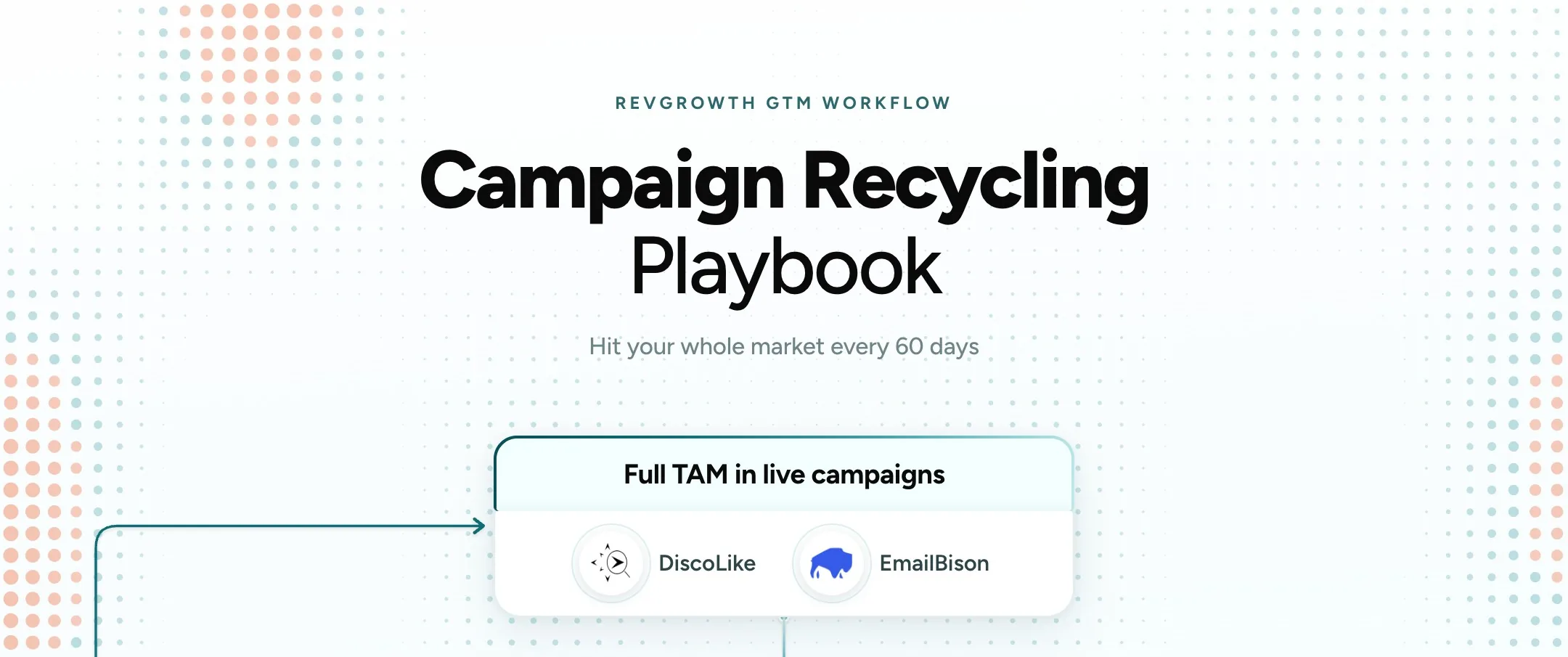
Step 1: Put Your Whole Market in Rotation
Your pipeline can only come from accounts you're reaching, so the accounts in rotation set your ceiling.
DiscoLike maps every company that fits your ICP, the written description of your best-fit customer. EmailBison runs the campaigns.
Every account sits in a live campaign. Each pass is one or two short emails, and a contact who finishes one without replying hears from you again 60 days later, with new messaging.
Each cycle is a fresh experiment on the same market, and nobody gets the same email twice.
Step 2: Get Every Interested Reply to a Rep Straight Away
Coverage brings replies in every week, so each one gets read and sorted the moment it lands.
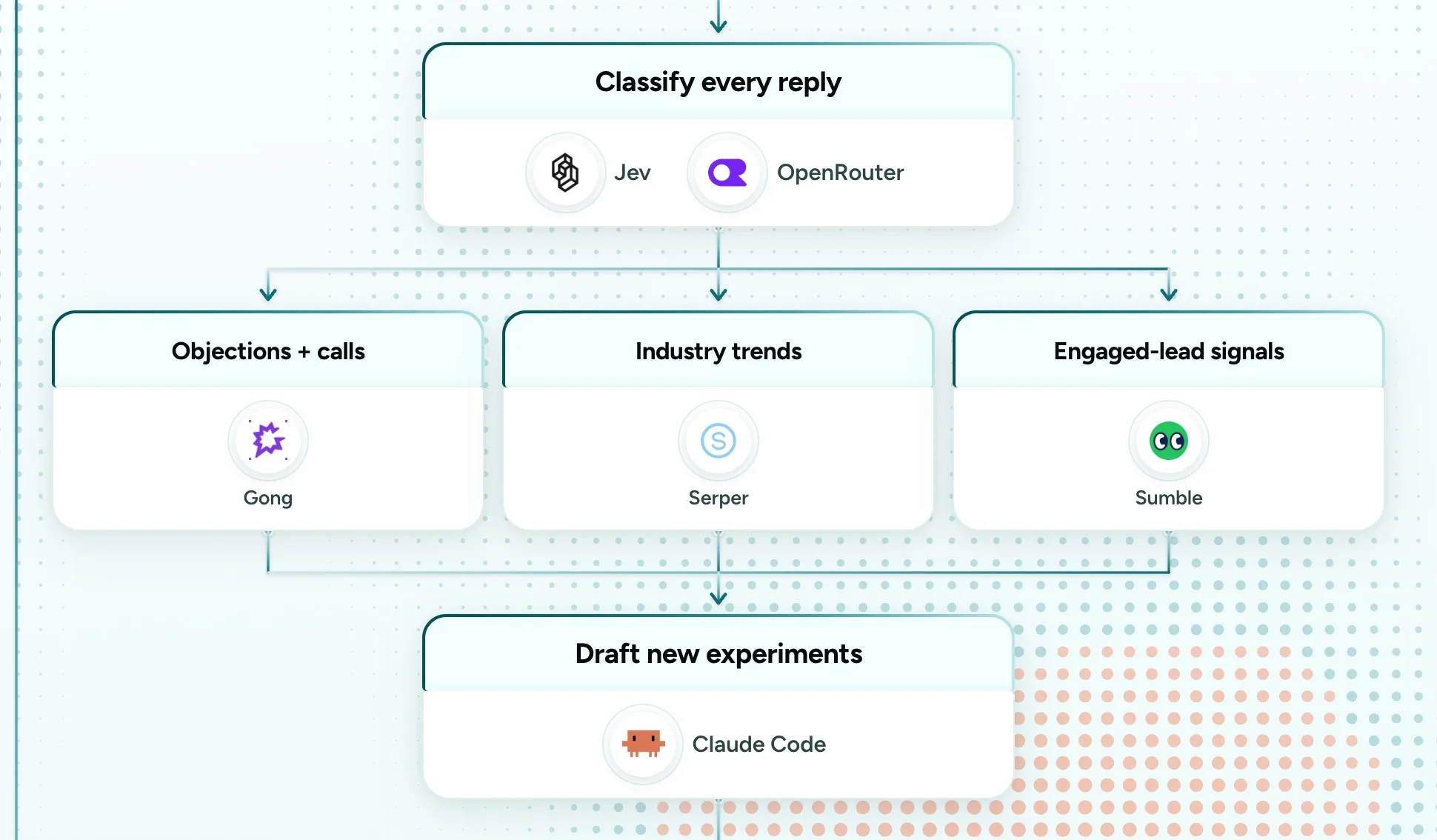
Jev and OpenRouter sort every reply into one of five buckets.
- Interested goes to a rep straight away
- An objection gets tagged with its reason, like price, timing or a competitor
- Not now comes back when they said to
- For a wrong person, the right one gets found and added
- An opt-out is never contacted again
Auto-replies get filtered out before anything is counted, so your numbers stay honest.
Your reps only see the people who want to talk. Everything else feeds the next cycle.
Step 3: Find a New Reason to Write Every Cycle
The next pass is only as good as its reason to write. That reason comes from three places.
- The objections in replies, plus what buyers said on recorded calls in Gong
- The news, launches and rule changes in your buyers' market, pulled with Serper, so an email can open on something current
- What your engaged leads have in common, like a hiring push or a tool in their stack, from Sumble
What your reps hear on calls this cycle becomes the next cycle's email.
Treat a trait a few engaged leads share as a guess until a test backs it up. Run it as an experiment before you rebuild your list around it.
Step 4: Draft Experiments and Approve Them in Slack
Claude Code turns what the cycle learned into a few new experiments, each with its hypothesis, its segment and the copy.
Each one changes one thing. The angle, the offer, the segment or the signal.
Give each experiment at least 1,000 sends before you judge it on replies and meetings. With fewer, a couple of lucky replies can make a weak idea look like a winner.
Last cycle's winners stay in place as the control, so you always know whether the new idea beat the old one.
A Slack message lays out each experiment, what it tests, why, and the copy. You approve it, edit it or turn it down.
Nothing new sends without a yes.
Here's a prompt to start from.
You're planning the next cycle's cold email experiments for one market.
Here is who we sell to and what we sell. [paste your ICP and offer]
Here are last cycle's replies, sorted by label. [paste the objections, not-nows and interested replies]
Here are notes from this cycle's sales calls. [paste call notes or transcripts]
Here's what changed in our buyers' market since the last cycle. [paste news, launches and rule changes]
Here's the email that won last cycle. [paste the control]
Write three experiments for the people who didn't reply. Each one changes one thing only, the angle, the offer, the segment or the signal. For each, give the hypothesis in one sentence, who it goes to, and two emails under 90 words each. Every email opens with the result we got for a company like theirs and offers something small we'd build for them for free. No link in the first email. Never reuse an opener they've already received. Keep the control exactly as written.
Step 5: Keep Your Inboxes Healthy and Grow What Works
A burned domain cuts your reach without telling you. You'd find out weeks later, when replies dry up.
Deliverability comes before the offer. If your emails aren't landing, you can't tell whether the offer works.
So each sending domain gets checked daily against blocklists such as SURBL and Spamhaus, along with its bounce rate.
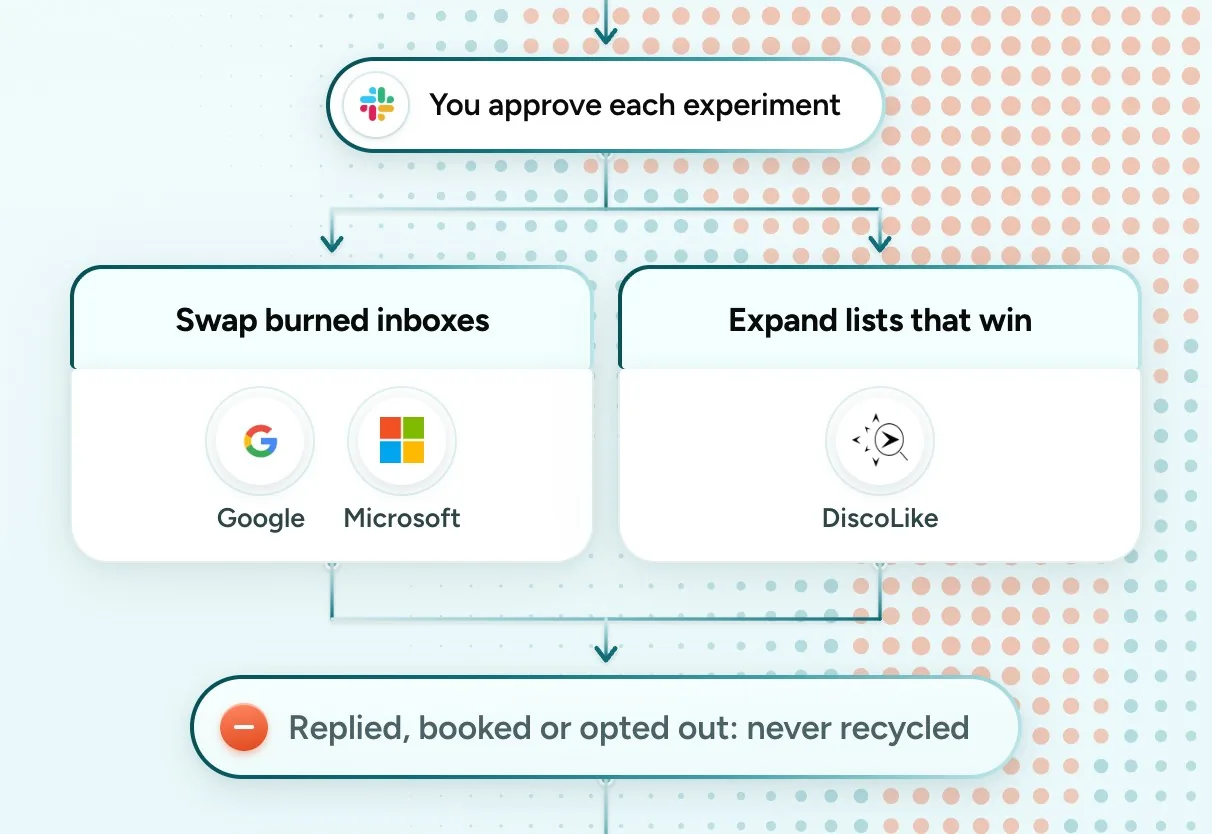
A listed or burned domain comes out of rotation, and new Google and Microsoft inboxes take its place. New inboxes warm up before they send, and warmup never switches off.
A campaign pauses on its own if bounces pass 3%. Buying new domains and inboxes waits for the same yes as the copy.
When a segment works, DiscoLike finds lookalikes of the accounts that replied, and they join the next cycle.
A reply shows interest and a meeting shows demand, so run the lookalikes as a test until their replies turn into meetings.
Step 6: Recycle Only the People Who Never Answered
Emailing the wrong people is how coverage turns into spam.
A contact goes back out only if all four of these hold.
- They finished a sequence
- They never replied, booked or opted out
- They never bounced
- They aren't mid-sequence in another live campaign
Check it across every campaign in your sending tool, never one campaign at a time. Someone who said no to March's campaign shouldn't get May's.
Customers and open deals come out before every cycle, so a rep never finds their own deal getting a cold email.
Step 7: Refresh the Contacts and Verify Again
People change jobs between cycles, and addresses go bad. Every email to someone who left is a wasted pass, and every bounce costs your domains.
Anyone who left the company gets replaced by whoever holds the role now. New accounts from your lookalikes get their buying committee found.
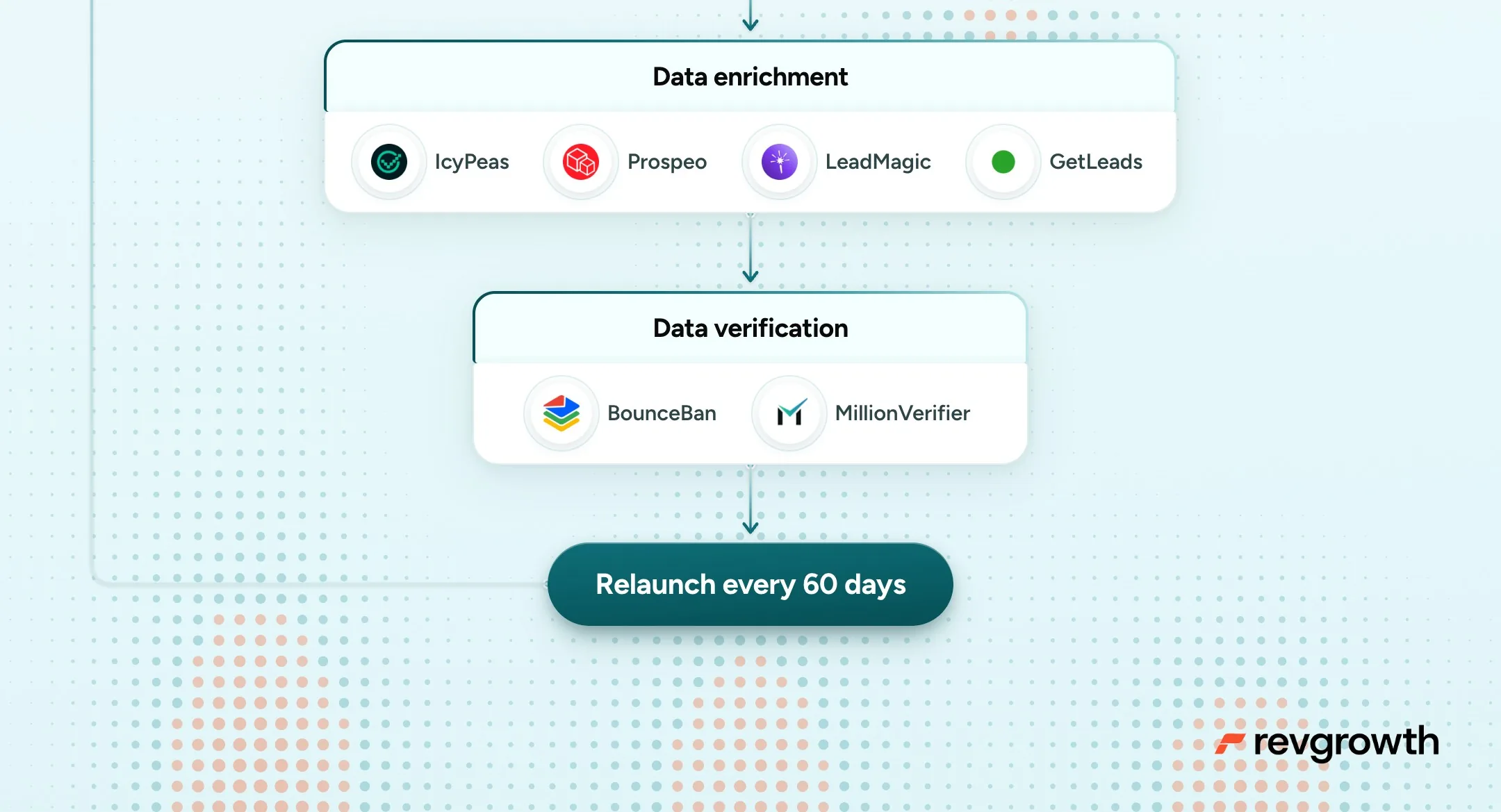
The emails come from IcyPeas, Prospeo, LeadMagic and GetLeads, run in that order, where each one only sees the contacts the ones before it missed.
Then every address gets checked twice again, even if it passed last time. MillionVerifier checks everything first, then BounceBan checks what passes.
Catch-all domains, the ones that accept any address, go out only if BounceBan marks them deliverable. They send from their own campaign, so their results read separately.
Then the cycle relaunches with the approved experiments, and the loop starts again.
What a Fresh Pass Looks Like
Every email still leads with the result you got for a company like theirs, plus something small you'd build for them for free. What changes from pass to pass is the reason you're writing now.
Here's a pass that opens on a change in their market.
Subject: {the change} at {company}
{First name}, saw {the change in their market, in one line}.
We helped {a company like theirs} {get a result they care about, in numbers}.
Put together {something small and useful} for {company}, built around {the change}.
We {what you do} for {who you do it for}.
Want me to send it over?
The pass after that might answer your top objection from last cycle, or go to a different person on the buying committee.
Same market, a new reason every time.
What Your Sales Team Gets
- The whole market in play, with nobody left untouched for a year
- Interested replies in a rep's hands straight away
- New reasons to call, taken from what buyers said on last cycle's calls
- No cold emails landing on customers or open deals
- Pipeline every month as buyers' timing changes, instead of a spike after each new list
Your First Cycle
One 60-day cycle, start to finish.
- Map every company in your market and count the buyers at each
- Pull every past campaign and find the true non-responders, checked across all of them
- Remove customers, open deals, opt-outs, bounces and anyone who replied
- Replace the people who left, then verify every address twice
- Read your past replies and recent calls, and write down your top three objections
- Draft three experiments that each change one thing, and approve them before anything sends
- Send, sort every reply as it lands, and get the interested ones to a rep the same day
- At the end of the 60 days, check your coverage numbers and start the next cycle
Where to Start
Start with the campaigns you've already run. My philosophy is to work the market you've already paid for before you buy a new list.
The non-responders in those campaigns are the lowest hanging fruit you have. Already found, already verified once, and never given a second reason to answer.
Pick one finished campaign, check its non-responders against every other campaign, and send the ones who clear it one new reason to talk.
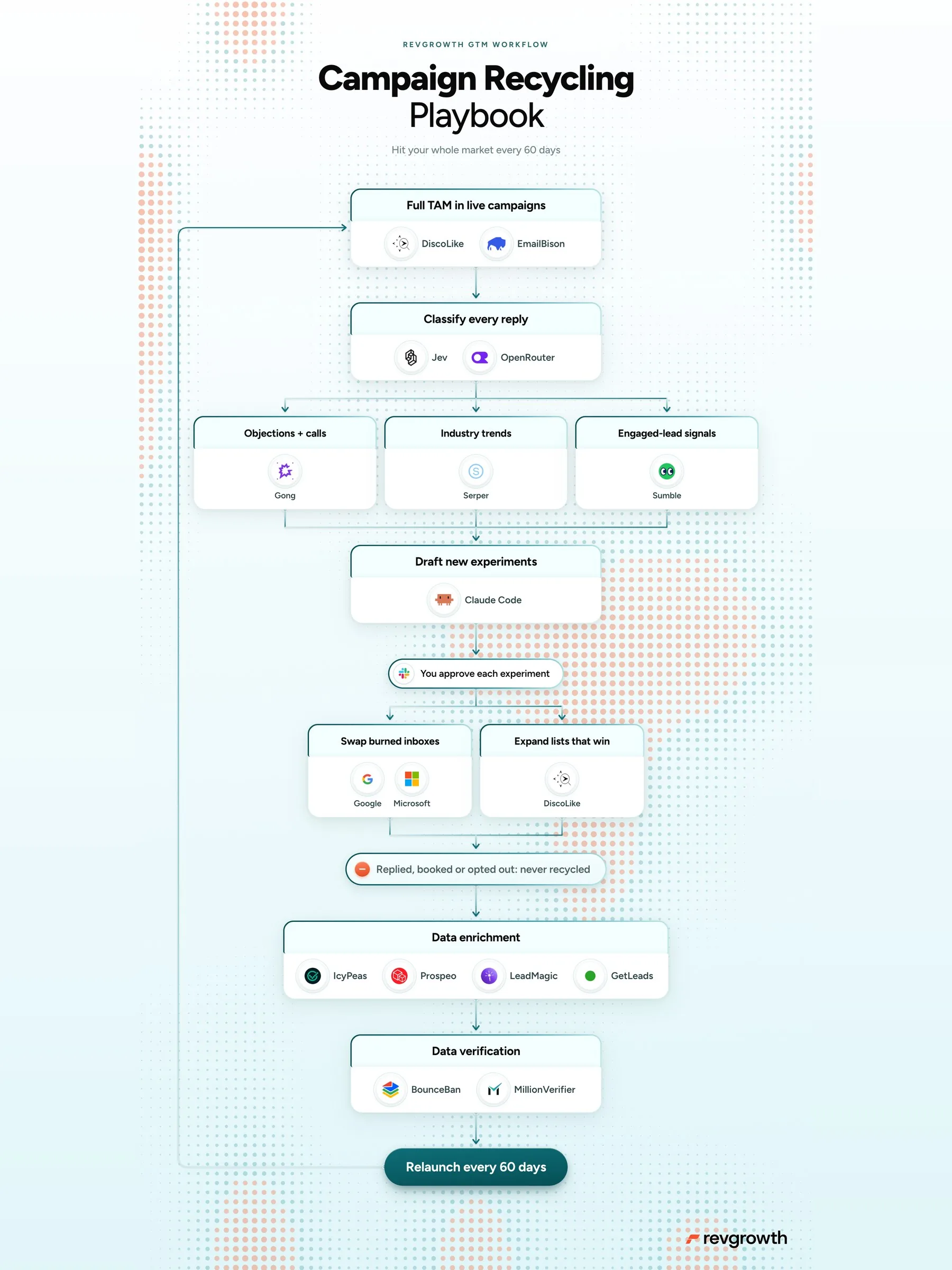
The full playbook is mapped step by step, with every tool, at revgrowth.ai/playbooks/campaign-recycling